
Distinguishing Edible from Poisonous Mushrooms
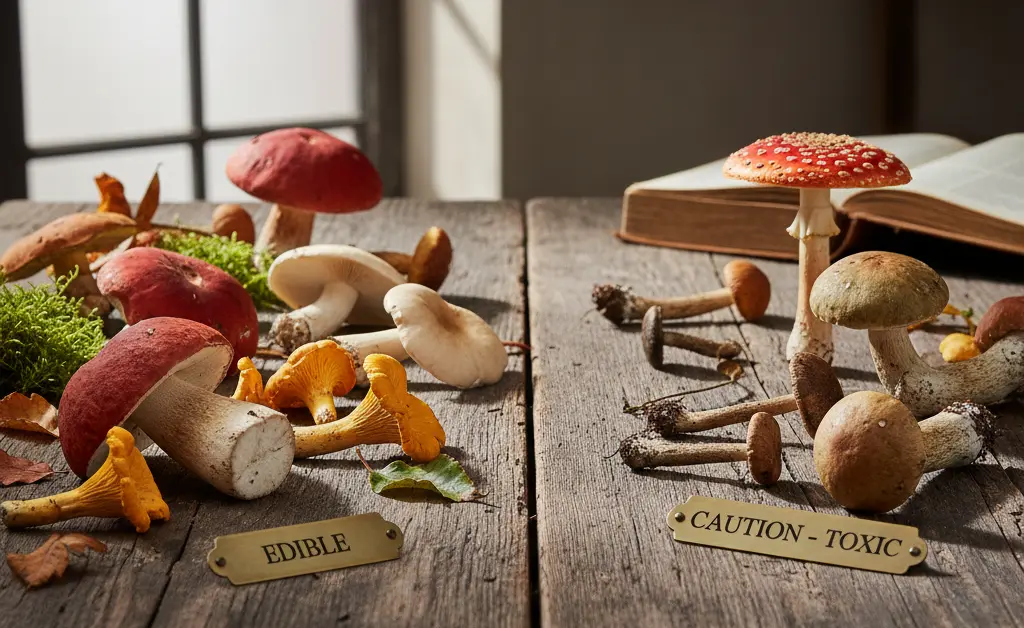
Imagine you’ve just returned from a walk in the woods, basket in hand, brimming with fascinating fungi. Or perhaps you’re at a farmers’ market, eyeing a unique variety you’ve never tried before. The thrill of discovery quickly turns to caution: how can you be absolutely sure what you’ve found or purchased is safe to eat? This common dilemma highlights a critical challenge for both amateur foragers and curious cooks. The natural world offers a vast array of fungi, some delicious and nutritious, others deceptively similar yet dangerously toxic. Understanding the crucial distinctions between edible mushrooms vs poisonous ones is not just a culinary skill, but a vital safety measure. This guide aims to equip you with the knowledge needed to confidently navigate the complex world of fungi identification.
Edible Mushrooms vs Poisonous: Understanding the Differences
The culinary world values the diverse flavors and textures that mushrooms bring to dishes, from earthy notes to umami richness. However, venturing into mushroom foraging or selecting unfamiliar varieties requires a solid understanding of how to differentiate edible mushrooms vs poisonous ones. The stakes are high; misidentification can lead to severe illness or even fatalities. Many toxic fungi mimic their harmless counterparts, making careful observation and knowledge of specific characteristics absolutely essential for safety. Defining edible mushrooms generally involves confirming their lack of toxic compounds, pleasant taste, and suitable texture for consumption. Conversely, defining poisonous mushrooms means identifying species that contain toxins capable of causing adverse reactions, which can range from mild gastrointestinal upset to organ damage and death. The risks of misidentification underscore the critical importance of accurate identification techniques.
Identifying Edible Mushrooms vs Poisonous Counterparts
Successful mushroom identification hinges on a systematic approach, examining various features that collectively paint a picture of the species. Relying on a single characteristic can be misleading, as many look-alikes share some traits. Therefore, a comprehensive assessment is crucial. Foragers often consult multiple field guides and cross-reference observations to minimize the risk of error. The ultimate goal is to confidently distinguish between safe and dangerous species, ensuring that any mushroom intended for consumption is indeed an edible variety and not a harmful doppelganger. This diligent process is fundamental to safely enjoying wild mushrooms and avoiding the perils of toxic fungi.
Key Characteristics for Distinguishing Edible and Poisonous Mushrooms
Several key features serve as vital clues in the complex task of mushroom identification. Paying close attention to these characteristics can help in differentiating edible mushrooms vs poisonous ones:
- Gills vs. Pores: Some mushrooms have gills (blade-like structures) on the underside of their cap, while others have pores (small holes). The arrangement, color, and attachment of gills can be distinctive. For example, some highly toxic species are known for specific gill characteristics.
- Spore Prints: A spore print, obtained by placing a mushroom cap gills-down on paper, reveals the color of its spores. This is a critical diagnostic feature, as spore color can vary significantly between species and often helps distinguish edible types from toxic ones.
- Cap Shape and Texture: Mushroom caps come in various shapes (e.g., conical, convex, flat) and textures (e.g., smooth, scaly, slimy). These attributes can provide valuable clues.
- Stem Characteristics: The stem (stipe) can offer further identification points, such as the presence or absence of a ring (annulus), a volva (cup-like structure at the base), or specific textures like scaly or smooth surfaces.
- Odor and Color: While not always reliable on its own, a mushroom’s odor can sometimes be distinctive (e.g., almond, anise, or unpleasant). Color can also be a key indicator, but it may vary with age and environmental conditions.
It is paramount to remember the golden rule: Never eat a mushroom you can’t positively identify. If in doubt, discard it. Foraging with an expert can provide invaluable hands-on learning and significantly enhance safety. Furthermore, understanding your local species and their known look-alikes is crucial. Avoid mushrooms near polluted areas, as they can absorb toxins from their environment, even if they are otherwise an edible species.
Common Edible Mushrooms and Their Dangerous Look-alikes
Many popular edible mushrooms have doppelgangers that are either inedible or highly poisonous. This section highlights some common pairs where distinguishing edible mushrooms vs poisonous ones is particularly challenging due to striking similarities. Understanding these specific differences is a cornerstone of mushroom safety. Safety precautions for mushroom foraging include not only knowing the features of a desirable mushroom but also being intimately familiar with the characteristics that set its toxic counterpart apart. It is also wise to understand the potential tremella mushroom side effects, as some lesser-known varieties can also cause adverse reactions.
Morels (Edible) vs. False Morels (Poisonous)
Morels are highly prized for their unique honeycomb appearance and rich flavor. Their caps are typically deeply pitted and attached to the stem. True morels are hollow from cap to stem. False morels, on the other hand, often have a more convoluted or brain-like cap, and their caps are frequently lobed or wrinkled rather than pitted. Crucially, false morels are typically not hollow but contain a cottony or chambered interior. These poisonous species contain gyromitrin, a toxic compound that can cause severe gastrointestinal distress, neurological symptoms, and even liver damage.
Oyster Mushrooms (Edible) vs. Jack-o’-Lantern Mushrooms (Poisonous)
Oyster mushrooms are a popular culinary choice, growing in shelf-like clusters on wood, often with white to gray caps and decurrent gills (running down the stem). Jack-o’-Lantern mushrooms (Omphalotus illudens) also grow in clusters, often on wood, and can have a similar overall shape and orange hue. However, a key differentiator is their bioluminescence, which is sometimes visible in the dark. Jack-o’-Lanterns are poisonous, causing severe gastrointestinal upset including cramps, vomiting, and diarrhea. Their gills are typically more orange than the paler gills of true oyster mushrooms.
Chanterelles (Edible) vs. False Chanterelles (Poisonous)
Chanterelles are beloved for their fruity aroma and distinctive, often trumpet-shaped form with false gills (folds that run down the stem and are not easily separated from the cap). Their color is usually golden-yellow to orange. False Chanterelles (Hygrophoropsis aurantiaca) can look deceptively similar, sharing a similar color and shape. However, false chanterelles possess true, thin, blade-like gills that are easily separated from the cap and are typically more crowded. While not deadly, consuming false chanterelles can lead to unpleasant digestive upset. Other poisonous look-alikes also exist, making careful identification paramount when seeking true chanterelles.
Field Mushrooms (Edible) vs. Poisonous Agarics
The common field mushroom (Agaricus campestris) is a familiar and widely consumed edible species, closely related to the button mushroom. It typically has white caps, pinkish gills that turn dark brown with age, and a ring on the stem. Poisonous Agarics, such as the yellow-staining mushroom (Agaricus xanthodermus), are frequent look-alikes. When cut or bruised, the yellow-staining mushroom quickly turns yellow, especially at the base of the stem, and often has a distinct, unpleasant phenolic or inky odor, which is absent in the edible field mushroom. Before consumption, especially for varieties like the raw button mushroom, proper identification and preparation are essential. Ingesting poisonous Agarics can cause gastrointestinal distress, including nausea, vomiting, and diarrhea. What to do if you suspect mushroom poisoning is critical. Immediate steps to take include contacting emergency services or a poison control center immediately. When to seek medical help is always advisable if any symptoms occur after consuming wild mushrooms. Be prepared with what information to provide to medical professionals, such as a description of the mushroom, how much was consumed, and when symptoms started. Information on mushroom toxicology can often be found through reliable sources like PubMed, aiding medical professionals.
The world of fungi is both fascinating and complex, offering culinary delights alongside serious dangers. Understanding the subtle yet critical differences between edible mushrooms vs poisonous ones is a skill that demands patience, meticulous observation, and often, the guidance of experienced foragers. While this guide provides a foundation for identifying key characteristics and common look-alikes, it serves as a starting point, not a definitive identification manual. Always prioritize safety above all else. When in doubt, it is best to err on the side of caution and abstain from consuming any wild mushroom whose identity you cannot confirm with absolute certainty. The beauty and bounty of the natural world should always be approached with respect, knowledge, and a commitment to personal safety.
Readers should understand that this article does not offer medical diagnosis or treatment. The information provided is for educational purposes only and is not a substitute for professional medical advice or emergency intervention. If you suspect mushroom poisoning, it is crucial to seek immediate medical attention or contact a poison control center without delay.
FAQ
How can you tell if a mushroom is edible or poisonous?
Distinguishing between edible and poisonous mushrooms requires expert knowledge and careful observation, as many toxic varieties closely resemble safe ones. Relying on folklore, simple identification rules, or general appearances is not a reliable method for determining edibility. It is crucial to consult with experienced mycologists or use comprehensive field guides specific to your region when identifying mushrooms.
What is the difference between edible and toxic mushrooms?
The fundamental difference lies in their chemical composition and the physiological response they elicit in humans. Edible mushrooms are safe for consumption and can be used as food, while toxic mushrooms contain compounds that can cause a range of adverse health effects, from mild gastrointestinal upset to severe organ damage or even death. This distinction is not always visually apparent, making accurate identification paramount.
What are the most common poisonous mushrooms?
Commonly encountered poisonous mushrooms include species from genera like Amanita, Galerina, and Lepiota, which are responsible for a significant number of mushroom poisonings. For example, the Death Cap (Amanita phalloides) and the Destroying Angel (Amanita bisporigera) are notoriously deadly and found in various parts of the world. Familiarity with the characteristics of these dangerous species is important for avoiding accidental ingestion.
Are there any easy-to-identify edible mushrooms?
While some edible mushrooms like Morels and Chanterelles are often considered relatively distinctive, even these have look-alikes that can be poisonous. True beginners should focus on learning a few specific edible mushrooms with absolutely no dangerous imposters in their habitat, under the guidance of an experienced forager. Even with seemingly easy-to-identify species, absolute certainty is always recommended.
What happens if you eat a poisonous mushroom?
Ingesting a poisonous mushroom can lead to a spectrum of symptoms, varying greatly depending on the specific toxin and the amount consumed. Effects can range from nausea, vomiting, and diarrhea to more severe issues like liver and kidney damage, hallucinations, or neurological impairment. In some cases, poisoning can be fatal, underscoring the critical importance of positive identification before consuming any wild mushroom.