
Enoki vs. Seafood Mushroom: A Definitive Comparison
Navigating the produce aisle can sometimes present culinary conundrums, especially when encountering similar-looking ingredients. A common source of confusion arises with the delicate, white, stringy mushrooms often found side-by-side. Many home cooks wonder if these are interchangeable or if distinct characteristics set them apart, impacting their use in various dishes. This article aims to clarify these distinctions, offering a comprehensive look at the enoki mushroom vs seafood mushroom. We will explore their appearances, flavor profiles, textural differences, and nutritional values to help you confidently choose the right mushroom for your next meal and maximize its culinary potential.
Understanding Enoki and Seafood Mushrooms: Are They the Same?
When examining the enoki mushroom vs seafood mushroom debate, it’s crucial to first understand their fundamental characteristics. While both are prized in Asian cuisine for their delicate appearance and unique textures, they are distinct varieties. The confusion often stems from their similar visual presentation when cultivated for market and their shared prevalence in certain culinary traditions. Despite superficial resemblances, their botanical origins and specific growing conditions lead to noticeable differences.
Appearance and Growth
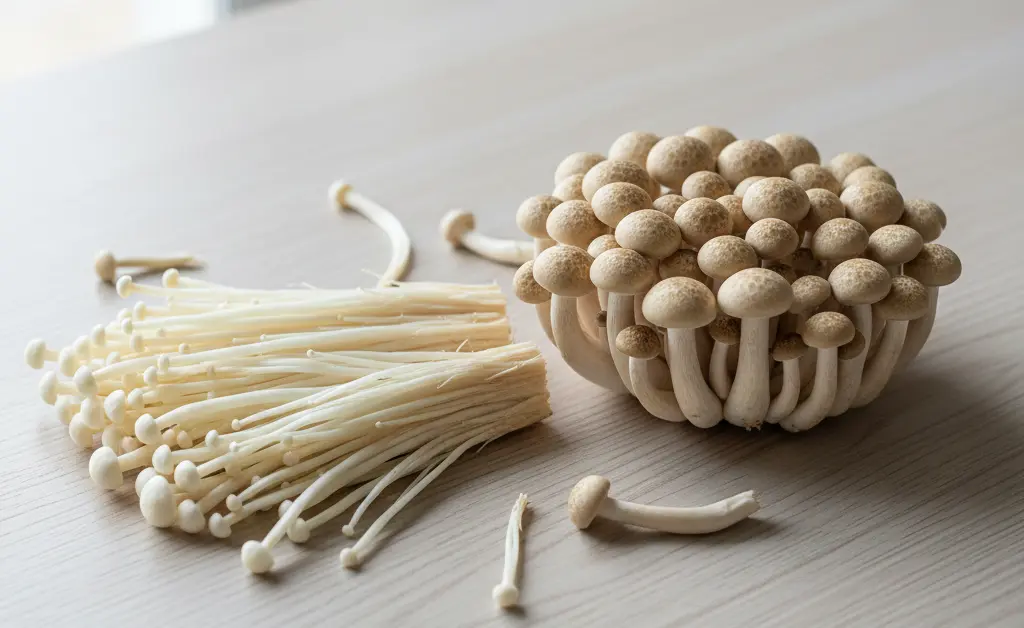
Key characteristics of enoki mushrooms include their long, thin stems and small, button-like caps. These are typically cultivated in dark, high-carbon dioxide environments, which encourages their signature elongated growth. In their wild form, enoki mushrooms, also known as velvet shank, have much shorter stems and larger, often orange-brown caps. Conversely, key characteristics of seafood mushrooms, also known as Shimeji mushrooms (specifically the white or brown varieties, often referred to as Beech mushrooms), grow in dense clusters with thicker, shorter stems and more pronounced, rounded caps. They are typically cultivated to retain their compact, clustered form. Understanding various fungi helps clarify comparisons like tremella mushroom vs snow fungus, which are often discussed in culinary and health contexts.
Visual Distinctions
The visual distinctions between enoki and seafood mushrooms are quite apparent upon closer inspection. Enoki mushrooms are almost uniformly white or pale cream, with very slender, almost hair-like stems that often stick together in large bundles. Their caps are tiny, sometimes barely larger than the stem’s diameter. Seafood mushrooms, on the other hand, usually feature thicker, firmer stems and a more defined, marble-like cap. White seafood mushrooms are bright white, while their brown counterparts have mottled brown caps. Their overall structure is more robust and less delicate than enoki, forming tight, upright clusters.
Labeling Variations to Expect
Consumers may encounter various labeling variations when purchasing these mushrooms. Enoki mushrooms are often simply labeled “Enoki” or “Golden Needle mushrooms.” For seafood mushrooms, the labeling can be more diverse, including “White Beech mushroom,” “Brown Beech mushroom,” “Shimeji,” or sometimes ambiguously as “Oriental mushrooms.” The question, “Why is it called seafood mushroom?” arises from its delicate, slightly briny aroma and flavor that some find reminiscent of seafood, rather than any direct relation to marine life. “Seafood mushroom vs snow white mushroom” is also a common comparison, where “snow white mushroom” often refers to a type of white Shimeji. Understanding these different names is key to identifying the specific mushroom you intend to purchase. This deep dive into varieties also helps to distinguish specific comparisons like enoki mushroom vs shimeji.
Direct Comparison: Enoki vs. Seafood Mushrooms
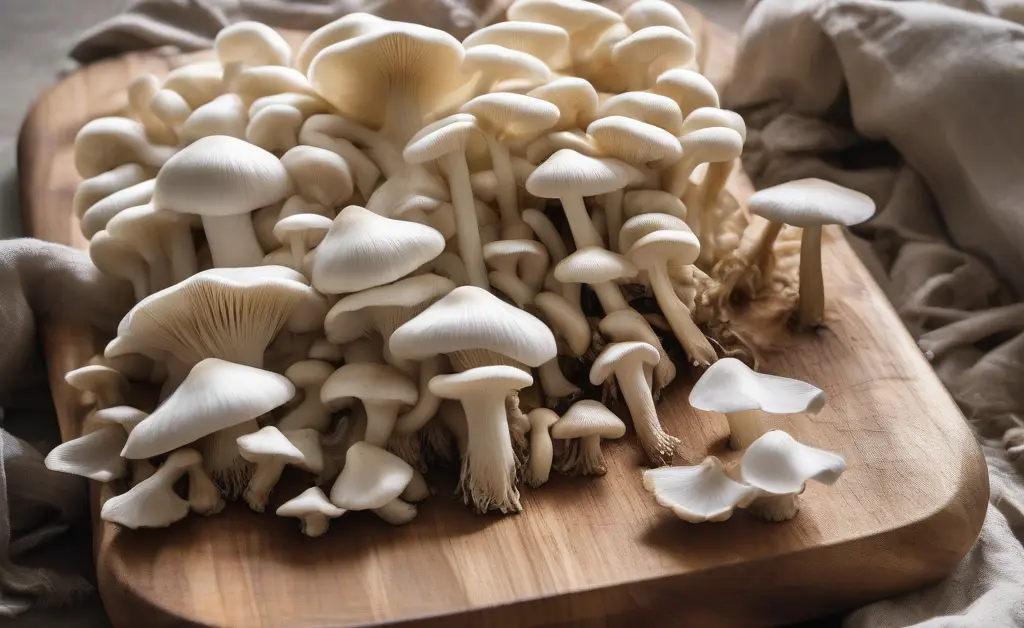
A side-by-side assessment of the enoki mushroom vs seafood mushroom reveals distinct characteristics that guide their culinary roles. While both offer versatility in the kitchen, their unique attributes mean they are not always perfectly interchangeable, especially when specific textures or flavor profiles are desired.
Flavor Profile and Texture
The flavor profile of enoki mushrooms is generally mild and slightly fruity or sweet, with a subtle umami undertone. When raw, they have a crisp, almost crunchy texture. Upon cooking, they retain some of their crunch but become more tender and slightly chewy, absorbing the flavors of the dish well. The taste and texture nuances of seafood mushrooms are distinct. They possess a firmer, more substantial texture that remains slightly crisp even after cooking. Their flavor is more robust, often described as nutty, earthy, and mildly sweet, with a distinct umami depth. This “seafood taste” is subtle but contributes significantly to their unique appeal.
Taste and Texture Nuances
To elaborate on the taste nuances, enoki mushrooms offer a delicate and clean taste that doesn’t overpower other ingredients. Their texture is characterized by a pleasant al dente bite. Seafood mushrooms, however, provide a more pronounced earthy flavor and a satisfyingly chewy yet firm texture that holds up well in longer cooking processes. The texture nuances are critical; enoki can become quite soft if overcooked, while seafood mushrooms maintain their integrity and slight snap.
Common Culinary Applications
Common culinary applications for enoki mushrooms include hot pots, soups (added at the very end to preserve their texture), stir-fries, and as a garnish for salads. Their delicate nature makes them suitable for quick cooking methods. Seafood mushrooms, due to their firmer texture and more intense flavor, are excellent in stir-fries, sautés, stews, and roasted dishes. They also hold up well in pasta dishes and rice preparations, offering a more prominent mushroom contribution to the overall dish.
Interchangeability in Recipes
Regarding interchangeability in recipes, enoki and seafood mushrooms can sometimes be substituted for one another, but with considerations. If a recipe calls for enoki for its delicate appearance and mild crispness (e.g., in a fresh salad or as a light topping), seafood mushrooms might be too robust in flavor and texture. Conversely, if a recipe relies on the firm bite and earthy flavor of seafood mushrooms (e.g., in a hearty sauté or simmered dish), enoki might become too soft and lose its presence. For optimal results, it’s generally best to use the mushroom specified or to understand how the substitution will alter the dish’s final character.
Enoki mushroom vs seafood mushroom taste
Enoki mushroom vs seafood mushroom taste
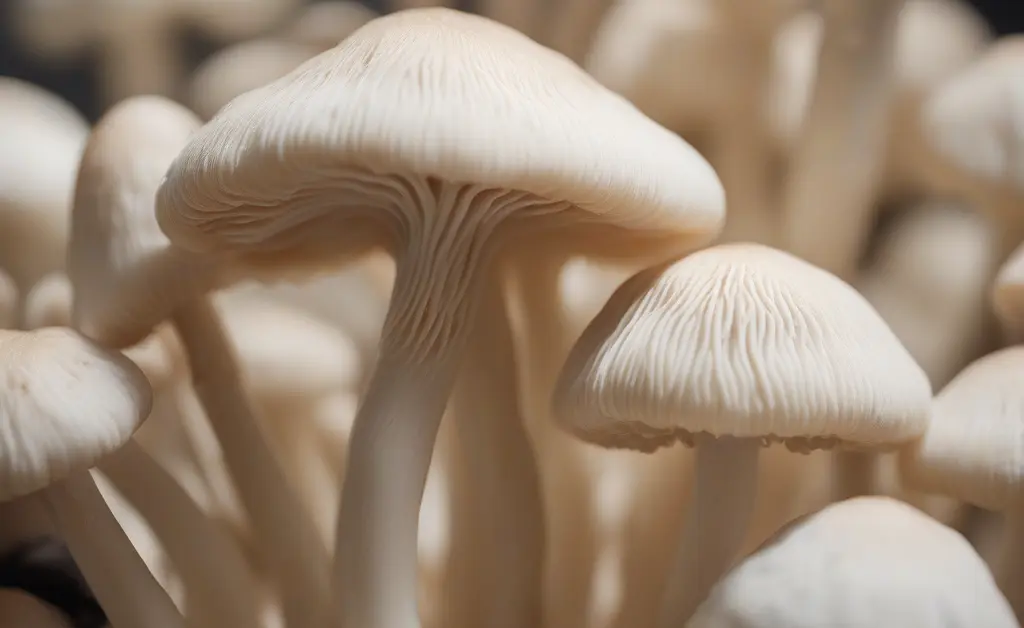
Delving deeper into the specific flavors, the enoki mushroom vs seafood mushroom taste profiles offer unique sensory experiences that greatly influence their use. Enoki mushrooms are prized for their very mild, subtly sweet, and slightly fruity notes, often described as delicate or neutral. This makes them highly versatile, as they readily absorb the flavors of other ingredients in a dish without dominating. Their raw taste is crisp and refreshing, while cooked enoki retains a gentle earthiness. Seafood mushrooms, in contrast, present a more pronounced and complex flavor. They offer a distinct nutty and earthy taste, combined with a subtle sweetness and a deep umami character. Many describe a faint “briny” quality, which contributes to their “seafood” moniker. This more robust flavor means they can stand on their own or add significant depth to a dish.
Enoki mushroom vs seafood mushroom nutrition
Enoki mushroom vs seafood mushroom nutrition
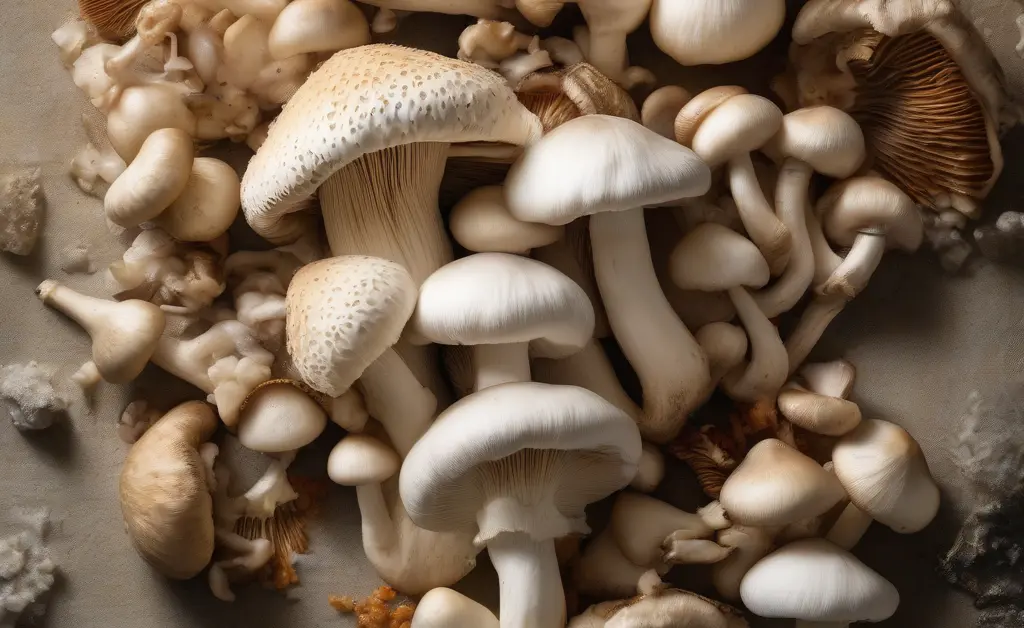
Beyond their culinary appeal, exploring the enoki mushroom vs seafood mushroom in terms of nutritional content can further inform dietary choices. Both mushrooms are generally low in calories and fat, making them excellent additions to a balanced diet. They both provide a good source of dietary fiber, which is beneficial for digestive health. Additionally, these fungi may offer various vitamins and minerals, including certain B vitamins (like niacin and riboflavin), and minerals such as potassium and copper. While specific nutrient concentrations may vary slightly between the two, both enoki and seafood mushrooms are considered nutritious ingredients that can contribute to overall wellness. Including either in your diet can be a delicious way to enhance nutrient intake without adding significant calories or unhealthy fats. For those interested in other health comparisons, exploring tremella mushroom vs collagen offers insights into different beneficial compounds. For more information on the health benefits of various foods, consult resources like the NIH.
Ultimately, both enoki and seafood mushrooms offer unique attributes that make them valuable in the kitchen. Understanding their distinct appearances, flavors, textures, and ideal culinary applications allows home cooks to make informed choices. While they may share some visual similarities, their individual characteristics ensure that each brings something special to a dish. Experimenting with both will undoubtedly enhance your culinary repertoire and add exciting dimensions to your meals.
This article aims to inform, not to replace professional healthcare advice. The nutritional information provided is for general knowledge and educational purposes only, and does not constitute medical advice. For specific dietary guidance or health concerns, please consult with a qualified healthcare professional or registered dietitian. Individual nutritional needs may vary.
FAQ
Are enoki and seafood mushrooms interchangeable?
While both enoki and seafood mushrooms offer a delicate texture, they are not typically interchangeable in recipes. Their flavor profiles and structural integrity when cooked differ, influencing the final dish. Understanding these distinctions is key to achieving the desired culinary outcome.
What is the main difference between enoki and seafood mushrooms?
The main difference lies in their origin and growth environment. Enoki mushrooms are cultivated from a specific fungus species, while “seafood mushrooms” is a common marketing term for a variety of mushrooms, often king oyster mushrooms, that have a distinct, slightly briny aroma. This aroma is what gives them their popular name.
Do seafood mushrooms actually taste like seafood?
Seafood mushrooms do not taste exactly like seafood, but they possess a subtle, umami-rich flavor with a hint of brininess. This unique taste is reminiscent of the ocean, leading to their descriptive name. Their texture, often firm and slightly chewy, also contributes to this culinary association.
How can I tell enoki and seafood mushrooms apart?
Visually, enoki mushrooms are easily distinguished by their long, thin stems topped with tiny white caps, resembling sprouts. Seafood mushrooms, typically king oyster mushrooms, have thick, substantial stems and broader caps, looking more like traditional mushrooms but with a unique shape. Their texture when raw also differs noticeably.
Can I use enoki instead of seafood mushrooms in a recipe?
You can use enoki instead of seafood mushrooms in a recipe, but expect a different result due to their contrasting textures and flavors. Enoki will add a delicate, slightly crisp element, while seafood mushrooms provide a firmer bite and a more pronounced, savory taste. Consider the intended texture and flavor profile of your dish when making this substitution.