
A Visual Guide to Button Mushroom Anatomy
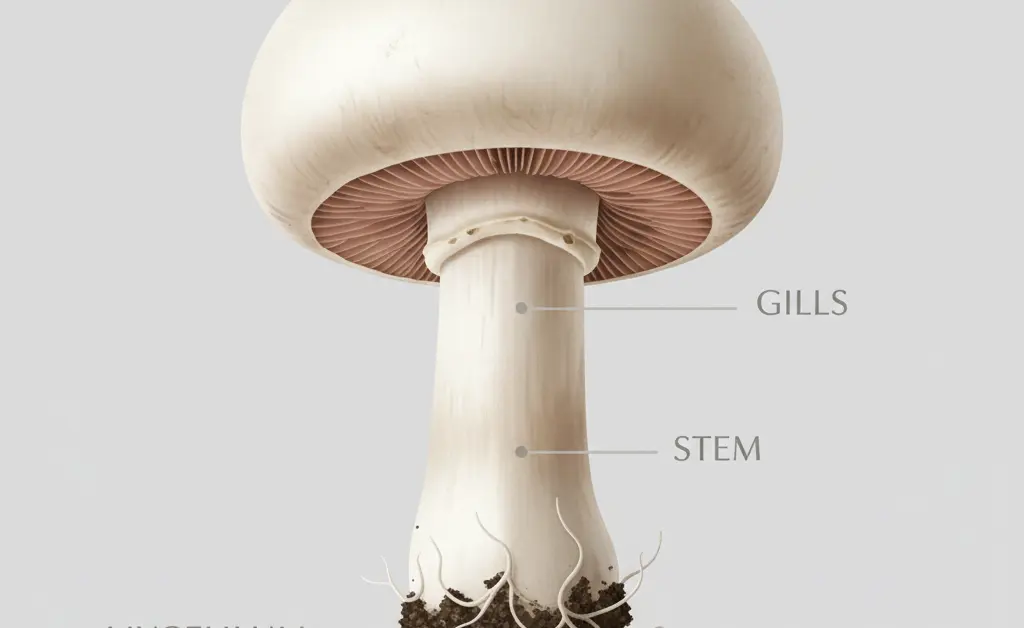
Have you ever paused to consider the intricate structure of the humble button mushroom as you prepare it for a meal? While often seen as a simple ingredient, this popular fungus possesses a surprisingly complex anatomy that allows it to grow and thrive. Understanding these distinct components not only deepens appreciation for its biological design but also offers insights into its cultivation and culinary properties. This guide provides a detailed button mushroom diagram, illustrating each essential part from its subterranean origins to its familiar cap, helping to demystify the organism that graces so many dishes worldwide. We will explore each section, explaining its function and contribution to the mushroom’s overall form.
Button mushroom diagram: Anatomy Explained
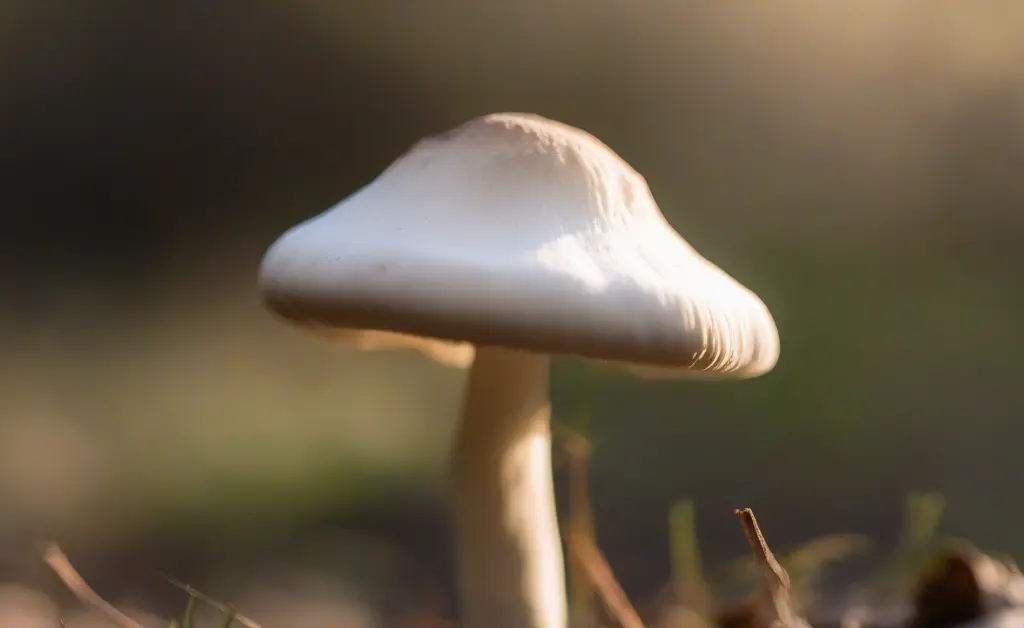
The button mushroom, scientifically known as Agaricus bisporus, presents a fascinating study in fungal biology. A comprehensive button mushroom diagram reveals a sophisticated structure, each part playing a crucial role in its life cycle, from spore production to nutrient absorption. While often perceived as a simple plant, a mushroom is actually the fruiting body of a much larger organism, mostly hidden beneath the surface. Understanding these visible components is key to appreciating the entire organism. For those interested in differentiating varieties, exploring button mushroom identification can be very informative.
Cap
The cap, or pileus, is the most recognizable part of the button mushroom, forming its umbrella-like top. Its primary function is to protect the delicate gills underneath, which are vital for spore dispersal. The cap can vary in color from white to cream or light brown, depending on the specific strain and growing conditions. Its shape can also change as the mushroom matures, often starting as rounded or bell-shaped and flattening out over time. The cap’s texture and size are important indicators of the mushroom’s age and quality.
Gills
Located on the underside of the cap, the gills (lamellae) are thin, plate-like structures arranged radially from the stem to the cap’s edge. These intricate folds are the reproductive engines of the mushroom, where microscopic spores are produced and released. In a young button mushroom, the gills are typically pinkish, gradually darkening to brown or black as the spores mature. The number, spacing, and attachment of the gills to the stem are key features in mushroom identification.
Stem
The stem, also known as the stipe, serves as the central support structure for the cap, elevating it above the substrate to facilitate wider spore dispersal. It acts as a conduit, transporting water and nutrients from the underground mycelial network to the developing cap and gills. The stem of a button mushroom is typically stout and white, often smooth or slightly fibrous. Its texture and firmness can indicate the freshness of the mushroom.
Ring (Annulus)
Many button mushrooms feature a ring, or annulus, on their stem. This structure is a remnant of the partial veil, a protective membrane that covers the gills when the mushroom is young and still developing. As the cap expands and separates from the stem, this veil tears, leaving a skirt-like ring around the stem. In button mushrooms, this ring is usually white and often fragile, sometimes disappearing or becoming less prominent with age.
Mycelium
The mycelium is the vegetative part of the fungus, an extensive network of fine, thread-like structures called hyphae that typically grows underground or within a substrate. This hidden network is the true body of the mushroom organism, responsible for absorbing nutrients from its environment. It plays a crucial role in the decomposition of organic matter and is the foundation from which the visible fruiting bodies emerge. All the parts of the mushroom we consume are supported by this vast, unseen network.
Fruiting Body Development
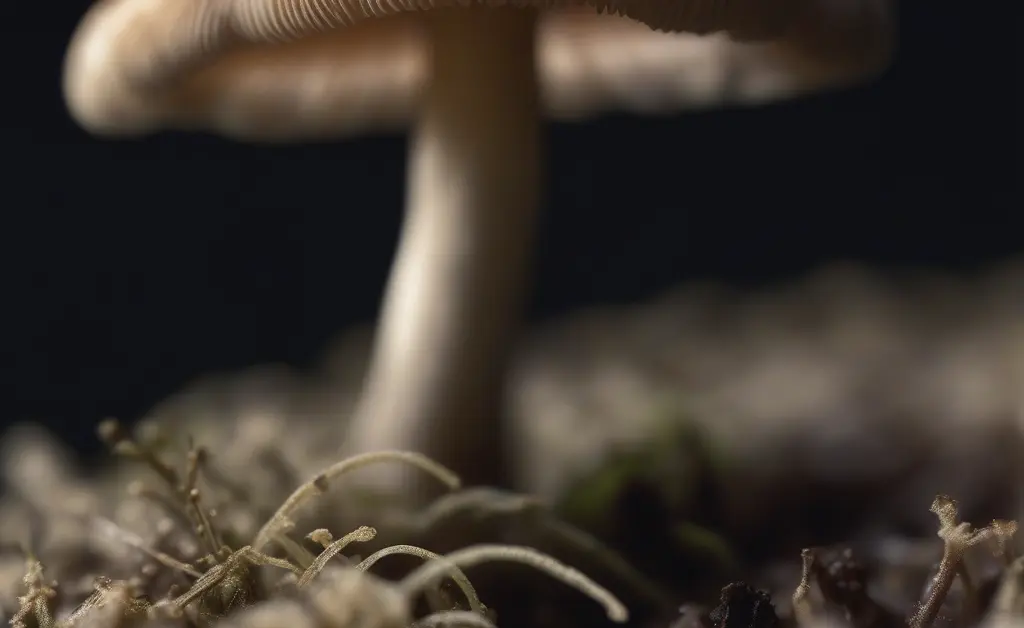
The development of a button mushroom’s fruiting body is a complex process, starting from microscopic spores and culminating in the familiar culinary item. Understanding this growth cycle, which a detailed button mushroom diagram helps to illustrate, provides insight into how these fungi thrive. The entire process from initial growth to maturity involves several distinct stages, each crucial for the mushroom’s survival and reproduction. There are also various button mushroom types that exhibit unique growth patterns.
Pinning
Pinning is a critical stage in mushroom cultivation, referring to the initial formation of tiny, immature mushrooms, often called “pins.” These pins emerge from the mycelial network once environmental conditions, such as temperature, humidity, and CO2 levels, are optimized. During this phase, the mycelium transitions from vegetative growth to reproductive growth. The appearance of these small, button-like structures marks the beginning of the visible fruiting body development, indicating that a harvest is on its way.
The button mushroom’s intricate anatomy, from its subterranean mycelial network to its spore-bearing cap, is a testament to nature’s complex designs. Each component plays a vital role in its life cycle, allowing this ubiquitous fungus to thrive and reproduce. A deeper understanding of its structure not only enriches our appreciation for this common culinary ingredient but also highlights the fascinating biology at play beneath the soil and on our plates. This detailed exploration underscores the elegance and efficiency of fungal forms, reminding us that even the simplest organisms can possess remarkable biological sophistication. For information on food safety and regulations, the FDA provides comprehensive guidelines.
The content provided in this article is intended for informational learning, not clinical application. While we strive to offer accurate and up-to-date information, it should not be considered a substitute for professional advice or guidance. Readers should consult with qualified professionals for any health-related concerns or before making any decisions related to their well-being. The information presented here is for general knowledge and educational purposes only.
FAQ
What are the parts of a button mushroom?
A button mushroom typically consists of a cap, stem (also called a stipe), and gills. The cap is the fleshy, umbrella-shaped top, which opens as the mushroom matures, revealing the gills underneath. The stem supports the cap and anchors the mushroom to its substrate.
Diagram of a mushroom?
A mushroom diagram illustrates the key anatomical features, such as the cap (pileus), stem (stipe), gills (lamellae), and sometimes the volva or ring. These parts are crucial for identification and understanding the mushroom’s reproductive and structural functions.