
How to Safely Identify Puffball Mushrooms
Imagine trying to pick out a specific tool from a toolbox, where many look similar but have distinct uses. Similarly, learning to distinguish between various types of fungi requires careful observation and knowledge of key features to ensure safety. Among the diverse world of mushrooms, puffballs are often sought after for their culinary appeal, but correctly identifying them is crucial. This guide provides essential techniques for accurate puffball mushroom identification, ensuring enthusiasts can confidently differentiate edible varieties from their potentially toxic look-alikes. Understanding internal characteristics, external markers, and common species variations is paramount for safe foraging. We will explore key features, common types, and important distinctions to help you confidently navigate the process.
What are Puffball Mushrooms?
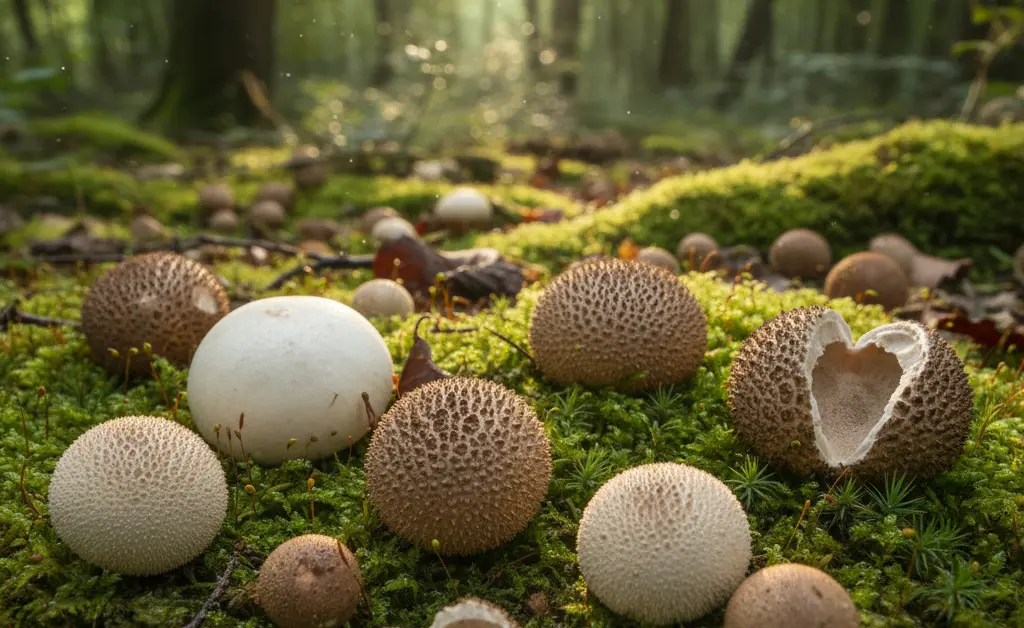
Puffball mushrooms are a distinct group of fungi known for their characteristic spherical or pear-shaped fruiting bodies. Unlike typical mushrooms, they do not possess an open cap or visible gills. Instead, their spores develop internally within a sac-like structure. When mature, these spores are released through an opening or by the rupture of the outer casing, often appearing as a puff of dust—hence their common name. They can vary significantly in size, from small, pea-sized specimens to massive, basketball-sized giants, and are found in various habitats, including forests, fields, and even lawns.
Key Identification Features
The primary characteristic distinguishing puffball mushrooms is their enclosed spore-producing structure. Instead of gills, their internal tissue, known as the gleba, starts firm and white, gradually turning yellow, olive, or purple-brown as spores mature. The outer skin, or peridium, can be smooth, warted, or spiny, varying by species. A crucial feature is the absence of a visible stem or stalk that supports a cap; while some puffballs may have a sterile base resembling a stalk, it does not separate cleanly like a true stipe. Their overall appearance tends to be somewhat uniform and bulbous, lacking the distinct cap-and-stem morphology of most other mushroom types.
How to Identify Puffball Mushrooms
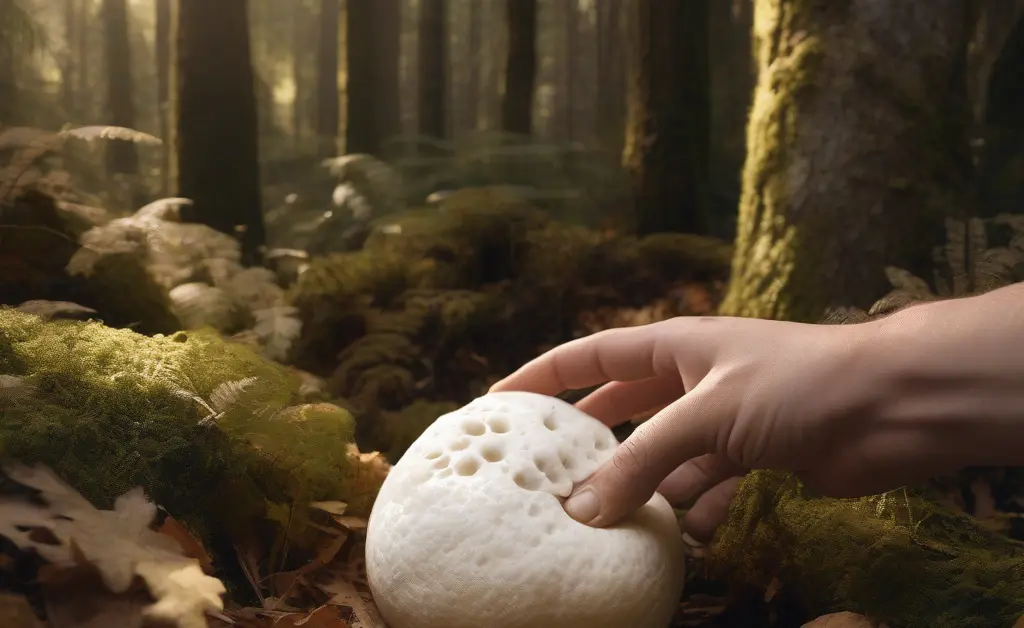
Successful puffball mushroom identification relies on a series of careful observations, particularly concerning their internal structure. It’s not enough to simply recognize their external shape; critical internal checks are essential to confirm their identity and edibility. Proper identification techniques help foragers distinguish true puffballs from potentially dangerous look-alikes.
Internal Color Test
The internal color test is perhaps the most critical step in confirming a puffball’s identity and edibility. To perform this, carefully cut the mushroom in half from top to bottom. A true, edible puffball, especially when young, will have a uniformly white, firm, and dense interior flesh, similar to a marshmallow or tofu. If the interior is any other color—yellow, olive, purple, or black—it is either too old to eat, an inedible species, or a dangerous look-alike. Any signs of discoloration, soft spots, or developing gill structures should be a clear warning to discard the mushroom.
Checking the Base for Gills or Stipe
Another crucial step in puffball mushroom identification is thoroughly examining the base of the mushroom after cutting it open. True puffballs should not have any developing internal structures resembling gills or a distinct stem (stipe) at their base. If you observe any evidence of a cap, gills, or a forming stem, it indicates that the mushroom is not a true puffball. This is particularly important for differentiating puffballs from the button stage of poisonous gilled mushrooms, such as immature Amanitas, which can appear superficially similar from the outside.
Puffball mushroom identification chart
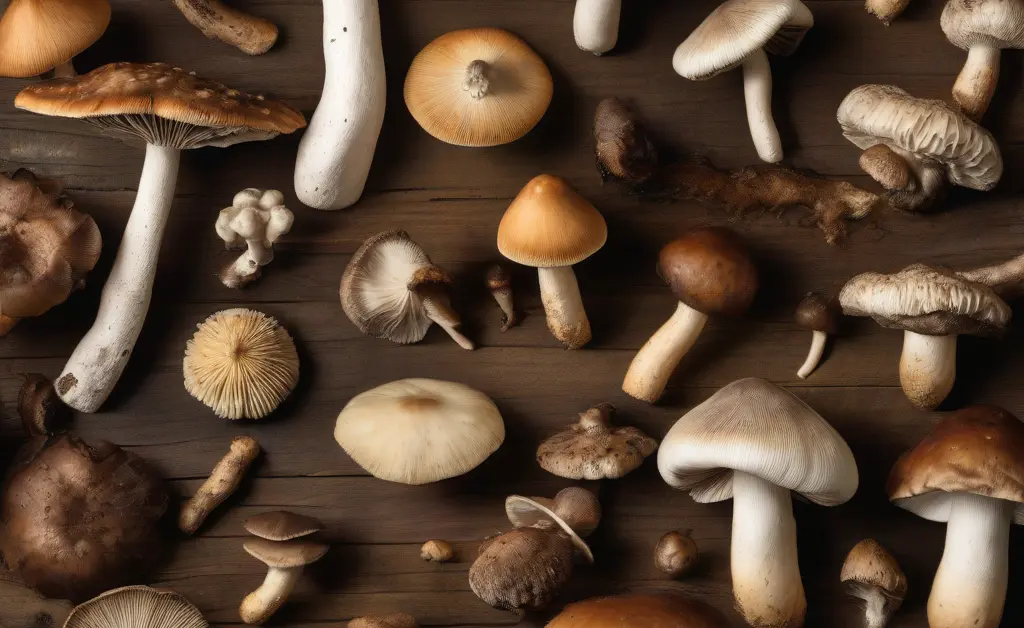
While no single chart can encompass all variations, a comprehensive puffball mushroom identification chart typically includes key characteristics to help distinguish between species and ensure safe foraging. Such a chart would detail differences in size, external texture (smooth, spiny, warted), habitat, and the color of the spore mass when mature. It would emphasize the paramount importance of the internal white flesh for edibility. Additionally, it often highlights common look-alikes and their differentiating features, making it a valuable tool for anyone serious about accurate identification. By cross-referencing multiple features, users can build confidence in their findings.
Common Types of Puffball Mushrooms
The world of puffball mushrooms is diverse, with several species commonly encountered by foragers. While they share general characteristics, each type has distinct features that aid in their identification. Understanding these common varieties is key to successful foraging.
Giant Puffball
The Giant Puffball (Calvatia gigantea) is one of the most recognizable and sought-after puffballs due to its impressive size, often reaching dimensions of 10 to 50 centimeters or more. It is typically spherical or somewhat flattened, lacks a stem, and has a smooth, soft, white or off-white outer skin. Giant Puffballs are commonly found in meadows, fields, and open woodlands, usually appearing in late summer and fall. Their interior must be uniformly white and firm to be considered edible.
Pear-Shaped Puffball
The Pear-Shaped Puffball (Apioperdon pyriforme), previously known as Lycoperdon pyriforme, is distinguished by its, as the name suggests, pear-like shape and a small, sterile, stem-like base. These puffballs are typically smaller, often growing in clusters on decaying wood, stumps, or logs. Their outer surface is smooth to finely granular, initially white to yellowish-brown, and darkens with age. Like other edible puffballs, their flesh must be firm and uniformly white inside.
Common Puffball
The Common Puffball (Lycoperdon perlatum), also known as the Gem-studded Puffball, is easily identified by the small, wart-like spines covering its surface, giving it a rough, gem-studded appearance. It is typically spherical or pear-shaped with a constricted base, growing to a modest size. These puffballs are very common, found in a variety of habitats, including woodlands, gardens, and along trails, often in groups. The inner flesh must be pristine white for consumption, turning yellowish to brownish as it matures.
Field Puffball
The Field Puffball (Lycoperdon pratense) is often found in grassy areas, pastures, and lawns. It typically has a somewhat flattened-globose shape and a short, stout, sterile base. Its outer surface is usually smooth to finely granular, often pale white to grayish. While generally smaller than the Giant Puffball, it can grow to several centimeters in diameter. As with all puffballs, a crucial characteristic for edibility is a solid, white interior, which indicates it is young and fresh.
Giant puffball mushroom identification
Giant puffball mushroom identification focuses on its extraordinary size and lack of a traditional mushroom structure. These impressive fungi are almost perfectly spherical or slightly flattened, with a smooth, bright white to off-white exterior. They can range from the size of a soccer ball to a watermelon, making them difficult to confuse with many other mushroom types, especially when mature. The most crucial identification test is cutting it open: the entire interior must be solid, firm, and pure white. Any discoloration, particularly yellow, olive, or purple, or the presence of gill-like structures, means it is either too old, an inedible species, or a dangerous look-alike and should not be consumed. Their usual habitat includes open fields, meadows, and grassy areas, often appearing after rains in late summer and fall.
Edible vs. Poisonous Puffballs
Distinguishing between edible and potentially poisonous puffballs, or their dangerous look-alikes, is paramount for safety. The golden rule for any puffball intended for consumption is that its interior must be uniformly firm and pure white. If the flesh is discolored (yellow, olive, brown, or purplish), watery, or shows any signs of developing gills or a cap-and-stem structure, it is not safe to eat. While many true puffball species are edible when young and white inside, there are no truly “poisonous” puffballs in the same way some gilled mushrooms are. The danger primarily comes from mistaking an immature, deadly gilled mushroom (like an Amanita button) for a puffball, or consuming a true puffball that is too old and discolored, which may cause digestive upset.
For more information on puffballs with brown interiors, consult this resource: puffball mushroom brown inside.
Potential Look-Alikes and How to Distinguish Them
While many true puffball mushrooms are edible and widely sought after, there are several fungi that can be mistaken for puffballs, some of which are highly toxic. Accurate puffball mushroom identification means not only knowing what a puffball is but also what it is not. Learning to distinguish these look-alikes is critical for safe foraging.
Immature Amanitas
The most dangerous puffball look-alikes are the button stages of deadly Amanita species, such as the Death Cap (Amanita phalloides) or Destroying Angel (Amanita virosa). These young mushrooms are encased in a universal veil, giving them a round or egg-like appearance that can resemble a puffball. The critical distinguishing feature is revealed when the mushroom is cut in half: an immature Amanita will show the unmistakable outline of a developing cap, gills, and a stem within its white interior. A true puffball, when cut open, will have a solid, undifferentiated, uniformly white interior without any internal structures.
Earthballs
Earthballs (genus Scleroderma) are another common look-alike for puffballs. While they are technically puffball-like fungi, they are generally considered inedible and can cause digestive upset. Earthballs typically have a thicker, tougher, and often scaly or warted outer skin compared to many true puffballs. The most definitive difference is their interior: when cut open, earthballs will have a dark, often purplish-black, firm flesh, sometimes marbled with white, which turns into a dark spore mass. In contrast, edible puffballs always have a pure white interior when young and fresh.
Other Fungi to Watch Out For
Beyond immature Amanitas and Earthballs, other less common fungi might be superficially mistaken for puffballs. Some truffle-like fungi grow underground, and while generally harmless, they don’t offer the same culinary experience. Additionally, various non-edible or simply unpalatable puffball species exist. The general rule for all mushrooms, and especially critical for puffball mushroom identification, is: when in doubt, throw it out. Never consume a mushroom unless you are 100% certain of its identification, and it has passed all the necessary internal and external checks for edibility.
For information on distinguishing between various puffballs and their dangerous counterparts, understanding puffball mushroom look-alikes is essential. It is critical to know potential poisonous puffball mushroom look-alike species before foraging.
Puffball mushroom identification is a rewarding skill for any foraging enthusiast, opening up opportunities to discover delicious fungi in the wild. However, it is a practice that demands diligence, precision, and an unwavering commitment to safety. By consistently applying the internal color test, checking for the absence of gills and stems, and thoroughly understanding potential look-alikes, foragers can confidently distinguish edible puffballs from their dangerous imposters. Always prioritize certainty in identification, and when any doubt arises, it is safest to leave the mushroom undisturbed. Scientific research on fungal identification and safety can be found at NCBI.
It is important to note that this content is not intended as medical advice. The information provided is for general knowledge and informational purposes only, and does not substitute for professional advice or diagnosis. Always consult with qualified experts for specific concerns regarding health or consumption of wild products. Individual reactions to fungi can vary, and proper identification is essential to avoid potential adverse effects.
FAQ
What do puffball mushrooms look like inside?
When sliced open, young and edible puffball mushrooms reveal a solid, uniform white interior. As they mature, this internal structure can change, often developing gills, spores, or even a distinctly yellow or brown hue, indicating they are no longer in their prime for consumption. This internal appearance is a key characteristic differentiating them from other fungal species.
What can puffball mushrooms be mistaken for?
Immature puffball mushrooms can sometimes be mistaken for young or button mushrooms, which have developing gills inside that are not yet visible externally. More dangerously, they can be confused with the toxic eggs of Amanita mushrooms, like the Destroying Angel, which have a distinct internal structure with immature gills and a dark center once revealed. Careful internal inspection is crucial for differentiation.
How can I confirm if these are edible puffball mushrooms?
Confirming the edibility of a puffball mushroom relies on a few key visual cues. The mushroom should be entirely white inside and lack any discernible shape of a developing cap, stem, or gills. If you cut it open and see any of these features, or if the internal flesh is yellow or brown, it is best to avoid consumption. Accurate puffball mushroom identification is critical for safety.
Continue reading
You May Also Like
How to Safely Identify Chanterelle Mushrooms
This chanterelle mushroom identification guide helps you forage confidently by explaining key features and how to avoid dangerous look-alikes.
Safely Identifying Puffball Mushrooms in Arkansas
Our guide helps you safely identify the puffball mushroom Arkansas has to offer, detailing key features to confidently avoid toxic look-alikes.
Foraging Puffball Mushrooms Safely in Oklahoma
This authoritative guide explains how to safely identify the edible puffball mushroom oklahoma and distinguish it from poisonous look-alikes.