
Distinguishing Puffballs from Poisonous Amanitas
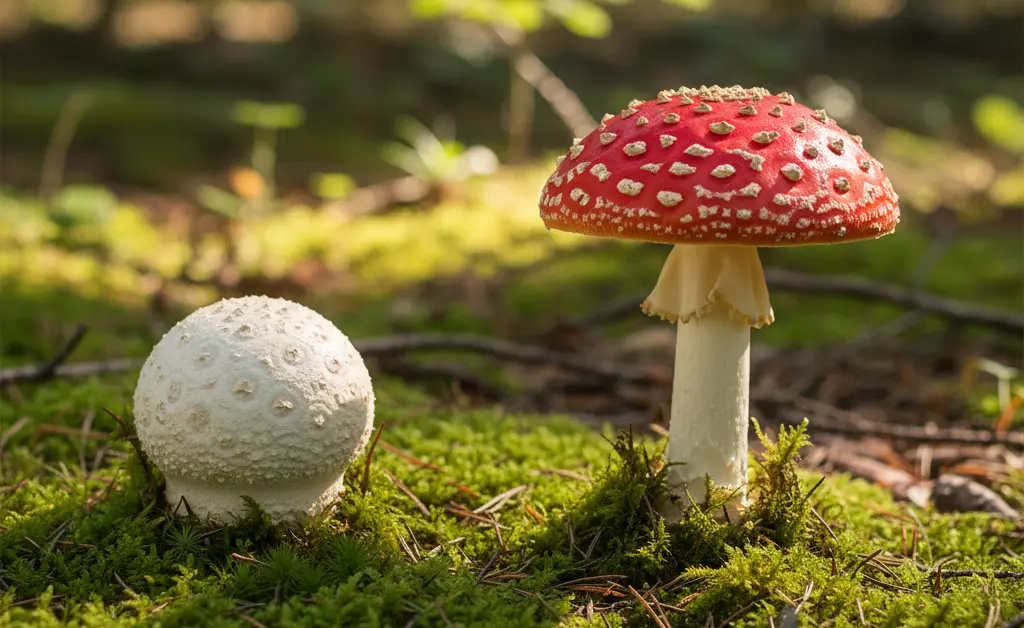
Accurate mushroom identification is paramount for foragers and enthusiasts alike, especially when distinguishing edible varieties from potentially lethal ones. Understanding the nuanced differences between seemingly similar fungi can literally be life-saving, preventing serious health consequences. Many white, round, or egg-shaped mushrooms, found across various environments, can appear deceptively similar, leading to dangerous misidentification by the inexperienced. This guide provides essential, practical information for distinguishing a puffball mushroom vs amanita, highlighting key characteristics and critical distinctions that prevent common errors in the field. By thoroughly examining these vital identification markers, readers can gain the knowledge necessary to safely navigate the complex and rewarding world of wild mushrooms, ensuring their safety and enhancing their foraging experience.
Puffball mushroom vs amanita identification
Giant puffball mushroom vs amanita
When encountering a large, spherical, or somewhat flattened white mushroom in a field or forest, the initial thought might be a giant puffball mushroom. These impressive fungi, such as Calvatia gigantea, are highly sought after by foragers for their considerable size and distinctive culinary properties. However, it is crucial to understand how a giant puffball mushroom vs amanita differs, as some immature Amanita species can also start as a round, “egg-like” structure. The key distinguishing feature for a giant puffball is its internal structure: when sliced open, a true giant puffball will reveal a uniformly white, dense, and sporeless interior. There should be no sign of a developing cap, gills, or a stalk within. Any hint of these structures indicates it is not a puffball and should be treated with extreme caution, as it could be a deadly Amanita.
Is it a puffball or an amanita egg?
One of the most critical steps in mushroom identification, especially for fungi resembling eggs, is to perform a cross-section. Many species, including puffball mushrooms and Amanita mushrooms, can appear as a white, egg-shaped object in their early developmental stages. An immature puffball, when cut vertically, will display a solid, homogenous white flesh throughout its interior. It will have no differentiation in texture or color. In stark contrast, an immature Amanita, often referred to as an “amanita egg,” will reveal the nascent structures of a cap, gills, and a stalk within its protective universal veil. These internal parts may be tightly packed and undeveloped, but their presence is a clear indicator that the mushroom is not a puffball. Always cut open any suspected puffball before considering it for consumption, as this simple step can prevent a potentially fatal error. For more on this, consult our guide on young puffball mushroom identification.
How can I tell if a mushroom is an Amanita mushroom?
Identifying Amanita mushrooms requires careful observation of several key characteristics. Many Amanita species, including some of the most toxic ones, possess a combination of features that distinguish them from other fungi. These often include a volva (a cup-like structure at the base of the stalk, representing the remnants of the universal veil), an annulus (a ring or skirt on the stalk, the remnant of the partial veil), and white gills that are free from the stalk. The cap can vary widely in color and texture, sometimes adorned with patches or warts. However, these features may not always be obvious, especially in very young specimens. For instance, the volva might be buried in the ground, or the annulus might be fragile and disappear. Developing a thorough understanding of the hallmarks of the Amanita genus is essential for safe mushroom identification, ensuring that foragers do not mistake a benign puffball mushroom vs amanita.
Key Differences: Puffball vs. Amanita
Internal Structure: Uniformity vs. Gills
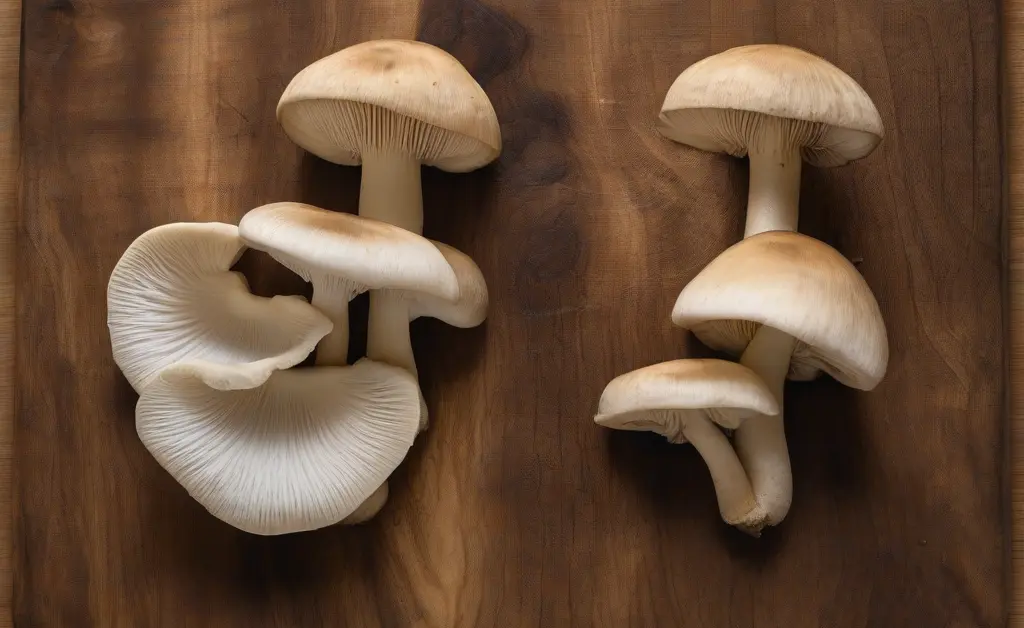
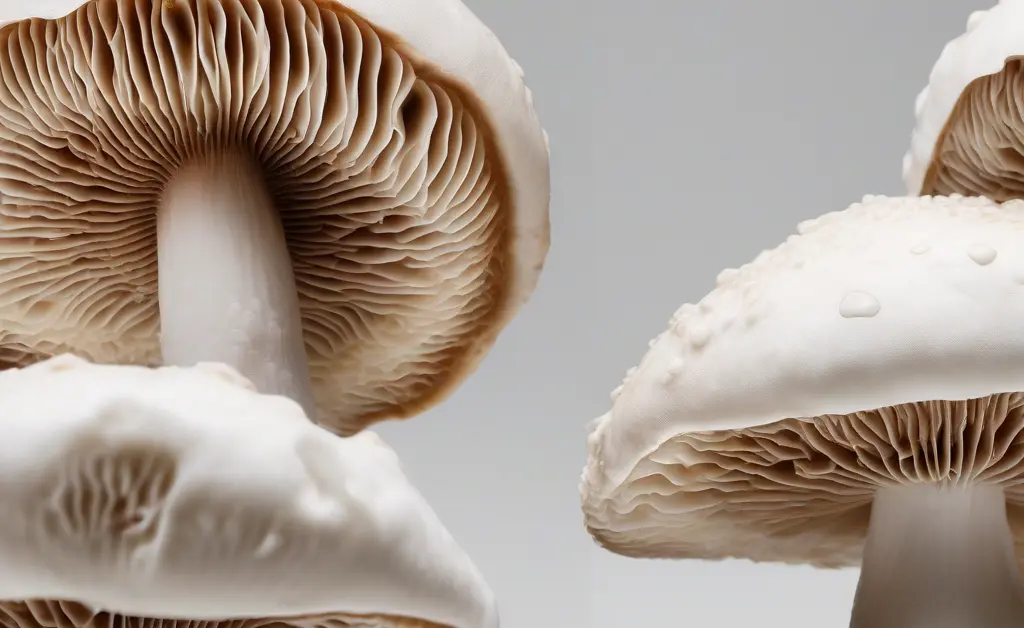
The most reliable method for distinguishing a true puffball from an immature Amanita, especially when they are still in their ‘egg’ stage, lies in examining their internal structure. A genuine puffball mushroom, when cut in half vertically, will display a completely uniform, solid white interior. This dense, unblemished white flesh indicates that the mushroom is young and has not yet developed spores, which would turn the interior olive, brown, or purple. There should be no internal differentiation whatsoever—no sign of a forming cap, gills, or a stalk. Conversely, if you slice open a specimen that resembles a puffball but is, in fact, a young Amanita, you will observe the distinct outlines of a cap, developing gills, and a stalk neatly contained within the outer layer. Even if these structures are rudimentary, their presence unequivocally rules out the possibility of it being a safe, edible puffball.
Surface Texture and Appearance
While often white, the surface texture and overall appearance can offer initial clues when trying to differentiate a puffball mushroom vs amanita. Puffballs typically have a leathery, smooth, or sometimes spiny surface, depending on the species. They often grow directly from the ground or decaying wood, lacking a prominent stalk or distinct cap. The shapes can range from perfectly spherical to pear-shaped. Amanita species, on the other hand, frequently exhibit more complex and varied appearances. Their caps might be smooth, sticky, or adorned with distinct patches, warts, or scales, which are remnants of the universal veil. The presence of a clear stalk, often with an annulus (ring) and a volva (cup at the base), is characteristic of many Amanita species, even if these features are sometimes hidden or subtle. However, relying solely on external appearance can be misleading, especially for very young mushrooms or species with atypical features.
Growth Habits
Observing the growth habits can provide additional information for mushroom identification. Puffballs often emerge directly from the soil or from decaying wood, either singly or in clusters. They do not typically have a visible stalk that lifts a cap above the ground, though some may have a sterile, stem-like base. Their growth is generally terrestrial or saprobic, feeding on dead organic matter. Amanita mushrooms, in contrast, are mycorrhizal, meaning they form symbiotic relationships with tree roots. They typically grow on the ground near specific trees (e.g., oaks, pines, birches). Most Amanita species develop a distinct stalk that elevates a cap, and many will exhibit the tell-tale volva (a sac-like structure) at the base of the stalk, often buried just below the soil surface. This underground connection to tree roots and the presence of a distinct stalk with a volva are important indicators, differentiating them from the simpler growth form of a puffball mushroom vs amanita.
Puffball mushroom vs amanita poisonous
Puffball mushroom poisonous look alike
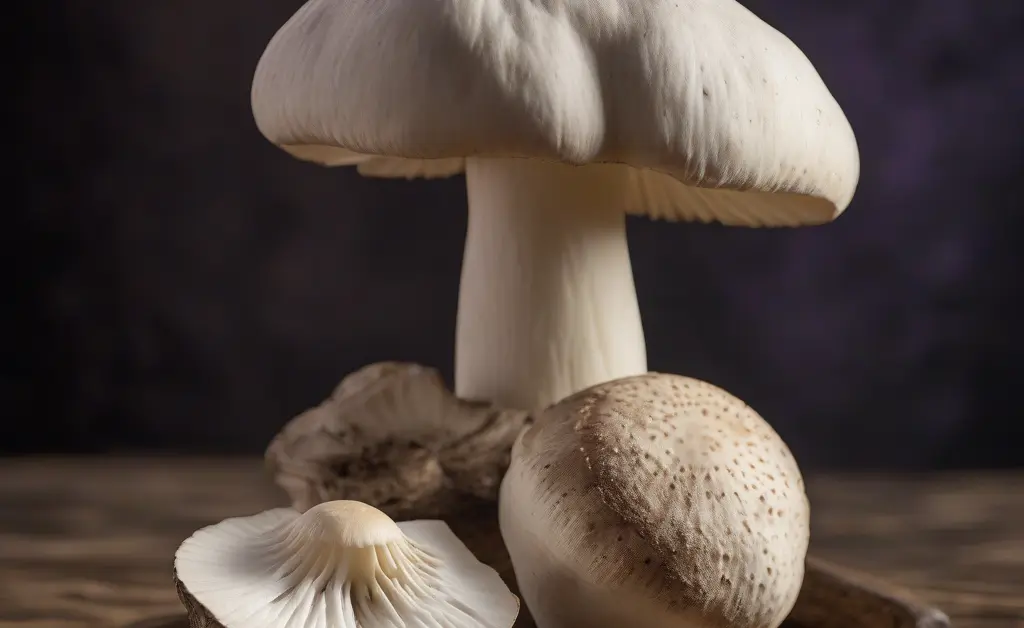
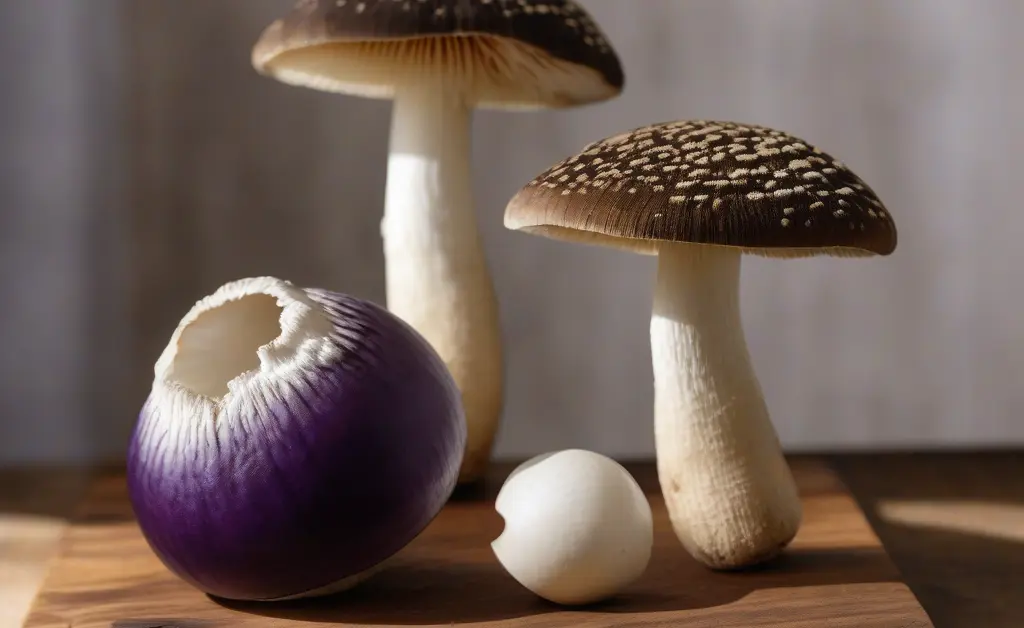
While many true puffball mushrooms are considered choice edibles when young and pristine, there are several poisonous look-alikes that can cause severe gastrointestinal distress or worse. The most dangerous imposters are young, “egg-like” stages of poisonous Amanita species, as discussed, which lack the internal gill development visible to the untrained eye. Another common poisonous look-alike is the earthball (genus Scleroderma). Earthballs often resemble puffballs but have a tough, leathery, or warty outer skin, and when cut open, their interior is typically dark, firm, and purplish-black from a very young age, lacking the pure white uniformity of an edible puffball. Some species of Scleroderma are mildly toxic, causing digestive upset. Additionally, old or decaying puffballs that have started to turn yellow, olive, or brown internally should always be avoided, as they may cause illness. The golden rule is always to slice any suspected puffball in half to confirm a pure white, uniform interior and avoid any mushroom with even a hint of internal gills or discoloration, thereby avoiding misidentifying a puffball mushroom vs amanita. For more details on poisonous varieties, consult this guide on puffball mushroom poisonous look-alikes.
Why Amanitas are Dangerous
Amanita mushrooms are among the most dangerous fungi in the world, with several species containing potent toxins that can be lethal even in small quantities. The primary reason Amanitas are dangerous is the presence of amatoxins, which are cyclic peptides that primarily target the liver and kidneys. These toxins are not destroyed by cooking, freezing, or drying. Ingestion can lead to severe gastrointestinal symptoms within 6-24 hours, followed by a deceptive period of apparent recovery, after which liver and kidney failure can occur, often proving fatal if not treated aggressively and promptly. Other Amanita species contain neurotoxins like ibotenic acid and muscimol, which affect the central nervous system, causing symptoms such as disorientation, hallucinations, and loss of muscle coordination. The insidious nature of amatoxins, combined with the often-delayed onset of severe symptoms, makes identifying Amanita mushrooms critical for public health and safety. Understanding the characteristics that differentiate a puffball mushroom vs amanita can literally be a matter of life or death.
Puffball mushroom vs amanita edible
Are white puffballs poisonous?
The edibility of white puffballs is a common question among foragers. When properly identified and consumed at the correct stage of development, most common puffball species are considered edible and quite palatable. However, the critical caveat is “properly identified.” A white puffball is generally considered safe to eat only if it is entirely pure white inside when cut open, with a uniform, solid texture and no sign of any internal developing structures such as gills or a stalk. If the interior shows any discoloration (yellow, olive, brown, or purplish-black), it indicates either an old, spoiled puffball or a poisonous look-alike, such as an earthball. For information on puffballs with yellowing interiors, see our article on puffball mushroom yellow inside. Furthermore, any white, egg-shaped mushroom that, when sliced, reveals even rudimentary internal gills, a cap, or a stalk, should be immediately discarded as it is likely a young, deadly Amanita. Therefore, while many white puffballs are edible, the potential for dangerous misidentification means extreme caution is warranted, underscoring the importance of clearly distinguishing a puffball mushroom vs amanita.
Edibility and Safety Considerations
Consulting Experts for Identification
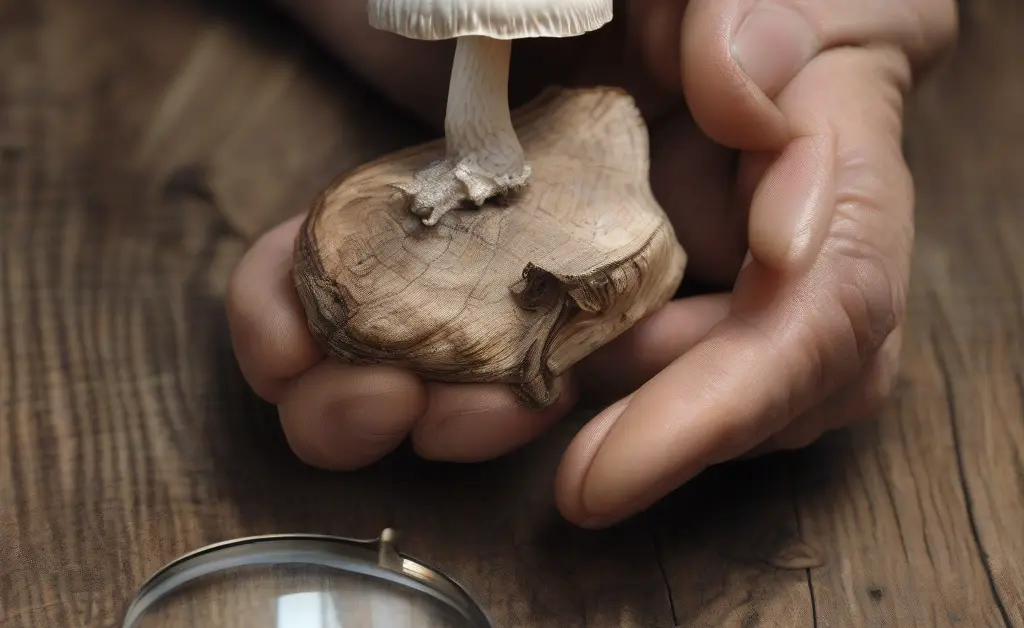
Given the potentially lethal consequences of misidentifying poisonous mushrooms, consulting experts for identification is an indispensable safety measure for anyone considering consuming wild fungi. Even experienced foragers can sometimes encounter unusual specimens or conditions that make identification challenging. Local mycological societies, university extension offices, and experienced mushroom experts can provide valuable guidance and often offer identification services or workshops. These resources can help confirm the identity of a mushroom, especially when grappling with the subtle distinctions required to tell a puffball mushroom vs amanita apart. For comprehensive mushroom identification details, refer to resources on puffball mushroom identification. Never rely solely on internet photos or general descriptions; hands-on inspection by a knowledgeable individual is always the safest approach. The adage “When in doubt, throw it out” should be strictly followed, as no culinary experience is worth risking your health or life.
Navigating the world of wild mushrooms requires diligence, education, and a cautious approach. While puffballs can be a rewarding find for foragers, the critical distinction between an edible puffball and a potentially deadly Amanita cannot be overstated. Always slice open any suspect mushroom to confirm a pure white, uniform interior. Learn to recognize the defining features of the Amanita genus, including the presence of a volva, annulus, and gills. Prioritize safety by never consuming a mushroom unless its identity is 100% certain and, when in doubt, seek expert verification. Your health and safety depend on careful and accurate identification. You can find additional safety information regarding wild foods from the FDA.
The content provided in this article is intended for informational learning, not clinical application. This information should not be used as a substitute for professional advice or diagnosis. Always consult with qualified experts for mushroom identification, as consumption of misidentified fungi can lead to serious health consequences, including severe illness or death. The responsibility for proper identification and safe consumption rests solely with the individual.
FAQ
How can you tell if a puffball mushroom is safe to eat?
A puffball mushroom is generally considered safe to eat when it is young and all white throughout its interior. Cutting it in half is the best way to check for this uniform white flesh. If you observe any signs of gills, yellowing, or browning inside, it is not a puffball and should not be consumed.
What do puffball mushrooms look like inside?
Young, edible puffball mushrooms are solid white and uniformly spongy or marshmallow-like throughout their entire interior. As they mature, this internal flesh develops into powdery spores, often changing color to yellow, brown, or even black.
Are all Amanita mushrooms poisonous?
While not all species within the Amanita genus are deadly poisonous, many are highly toxic and contain potent toxins that can cause severe illness or death. The presence of certain features on an Amanita mushroom, like a volva or annulus, can indicate its potential toxicity. Careful identification is crucial as some edible mushrooms can be mistaken for Amanitas.
What are the signs of an Amanita mushroom?
Key characteristics often associated with Amanita mushrooms include a cup-like structure called a volva at the base of the stem, a ring or annulus on the stem, and gills that are free from the cap. These features, along with the presence of a cap and stem structure, are important for identification.
Can a puffball mushroom be mistaken for an Amanita?
A young, immature Amanita mushroom that has not yet broken through its universal veil might superficially resemble a puffball due to its initial round shape. However, the critical internal difference is that a puffball remains uniformly white and spongy, while an immature Amanita is developing a distinct cap and stem structure inside, and will eventually reveal gills.
Continue reading
You May Also Like
Distinguishing Puffballs From Their Poisonous Look-Alikes
Confidently tell true puffballs from a poisonous puffball mushroom look alike by examining key internal and external features to ensure safe foraging.
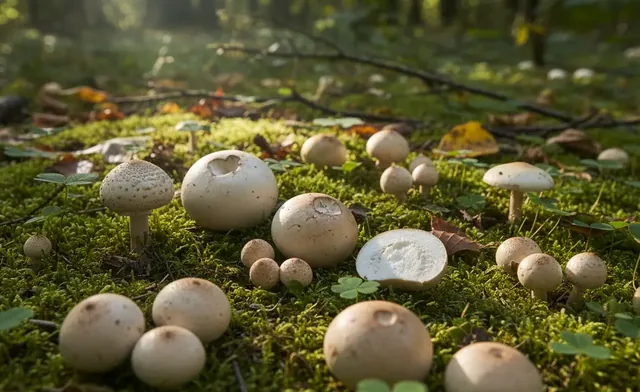
Identifying Edible Puffballs and Their Poisonous Mimics
Avoid deadly mistakes by learning the key visual differences between edible puffballs and poisonous puffball mushroom look alikes like Amanitas.
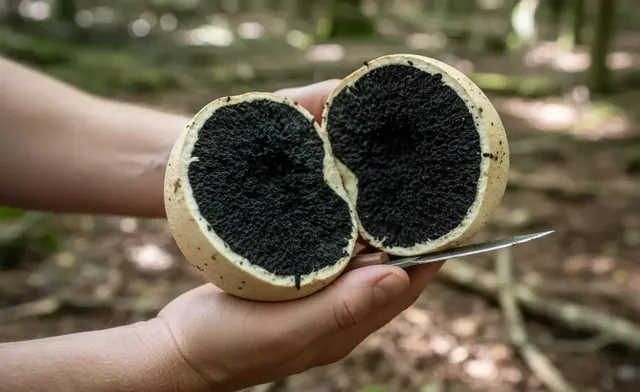
Decoding Puffballs: When a Black Center Is a Warning
Safely determine if a puffball mushroom black inside is a toxic Earthball or simply past its prime with our clear visual identification guide.