
Understanding the Puffball Mushroom Life Cycle
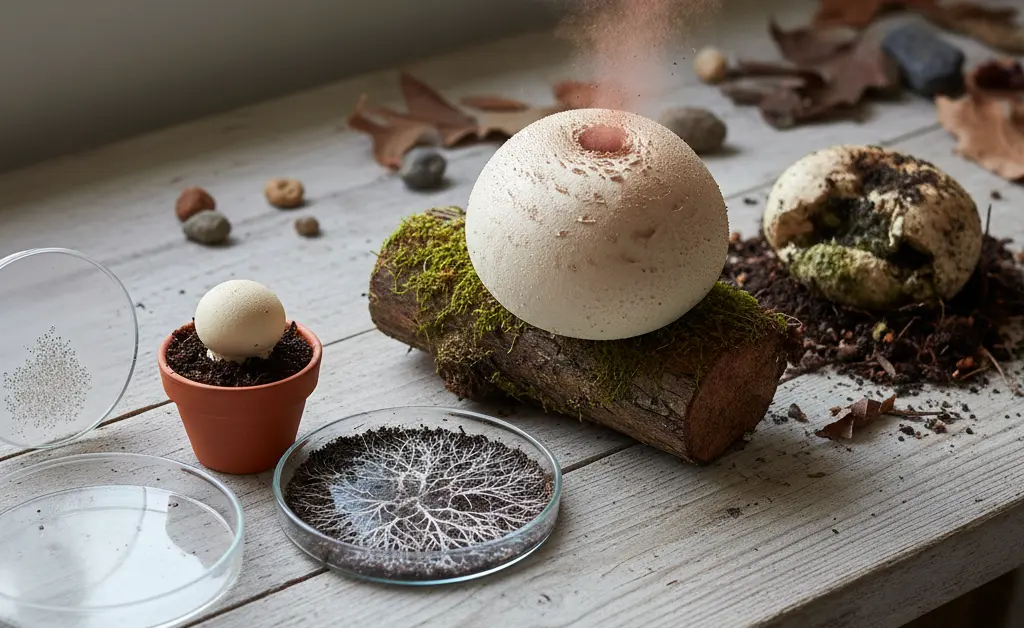
While many might assume the appearance of a puffball mushroom is a spontaneous event, emerging from the soil much like a rapidly growing plant, the reality involves a far more intricate and fascinating biological progression. Unlike the simple ‘seed-to-plant’ model often envisioned, fungi, particularly puffballs, undergo a sophisticated journey largely hidden beneath the surface. This process is not merely about quick growth but encompasses distinct developmental phases, from microscopic spores to the familiar, spore-filled fruiting body. Understanding the entire puffball mushroom life cycle reveals a complex interplay of environmental factors and fungal biology, essential for their reproduction and distribution across ecosystems.
The Puffball Mushroom Life Cycle Explained
The journey of a puffball mushroom, from an invisible microscopic entity to a prominent fruiting body, is a testament to the efficiency and adaptability of fungal reproduction. This complex biological process, often overlooked, is central to understanding how these unique fungi thrive in diverse environments. Each stage in the puffball mushroom life cycle is crucial, relying on specific conditions and biological mechanisms to ensure the continuation of the species. It begins with a tiny spore and culminates in the release of countless new spores, ready to embark on their own life journey.
From Spore to Mature Puffball
The fundamental path of a puffball begins with a single spore, microscopic and carried by wind or other means to a suitable location. Once environmental conditions are favorable, including adequate moisture and nutrients, the spore germinates. This germination leads to the development of a network of fine, thread-like structures known as hyphae. These hyphae grow outwards, forming a larger, often invisible, underground structure called mycelium. It is this mycelial network that absorbs nutrients from the substrate, acting as the primary feeding and growing body of the fungus, paving the way for the eventual emergence of the fruiting body.
Initiation (Mycelial Growth)
Mycelial growth marks the initial and most extensive phase of the puffball mushroom life cycle. When a spore lands on a suitable substrate, such as decaying wood or rich soil, it absorbs moisture and nutrients, initiating germination. The germinating spore produces a thin filament, a hypha, which branches repeatedly. This branching creates a vast, interconnected web of hyphae, the mycelium. The mycelium diligently explores its environment, secreting enzymes to break down complex organic matter into simpler compounds that it can absorb. This hidden growth can persist for extended periods, sometimes years, accumulating energy and resources before conditions are right for the formation of a visible fruiting body.
Stages of Puffball Mushroom Development
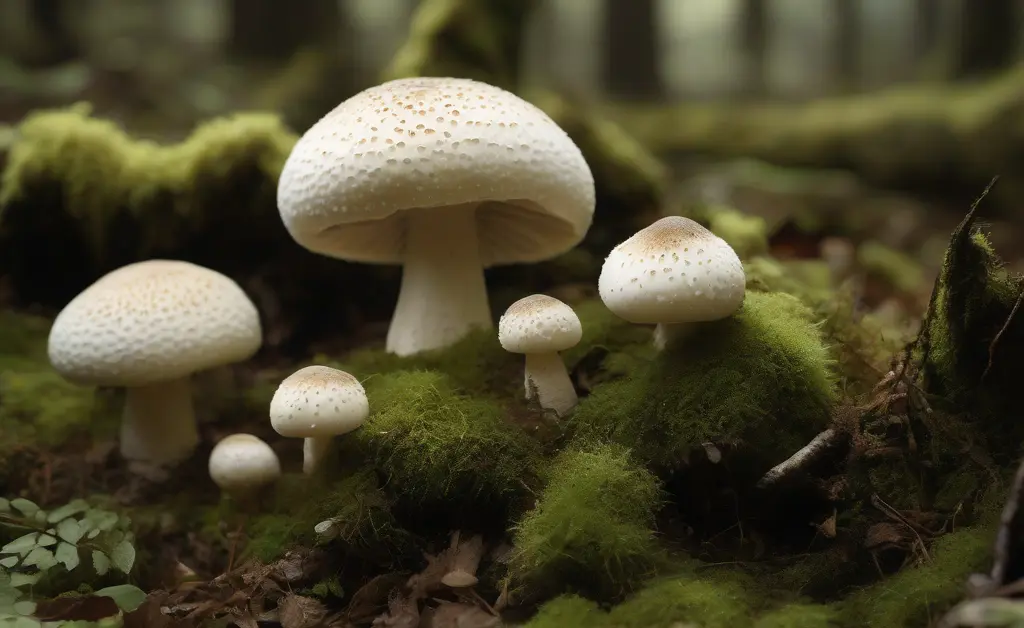
Once the mycelial network has amassed sufficient resources, it shifts its energy from vegetative growth to reproductive development. This transition marks the beginning of the visible stages in the puffball mushroom life cycle. The development of the fruiting body, which we recognize as the puffball, involves a series of distinct morphological changes, each leading towards the ultimate goal of spore production and dispersal. These stages are often influenced by environmental cues such as temperature fluctuations and moisture levels.
Formation of the Gleba
The formation of the gleba is a defining characteristic in the development of a puffball. Deep within the developing fruiting body, a specialized tissue begins to form. This inner mass, known as the gleba, is where the spores will ultimately be produced. Initially, the gleba is firm and white, often resembling marshmallow, and is completely enclosed by an outer layer, the peridium. As the puffball grows, the gleba expands, and its color may change, indicating the progression towards spore maturation. This internal structure is protected from the external environment, providing a controlled space for optimal spore development.
Maturation and Spore Production
As the puffball continues to mature, the gleba undergoes a profound transformation. The once firm, white tissue begins to darken and liquefy or dry out, eventually turning into a powdery mass of spores. Simultaneously, the peridium, the outer casing of the puffball, changes. For many species, it may thin, crack, or develop an aperture at the top. This maturation phase is critical, as it signifies that the countless spores within are fully developed and ready for release. The transition from a solid, internal mass to a powdery spore cloud is a remarkable aspect of the puffball mushroom life cycle, priming the fungus for its dispersal phase.
Spore Dispersal in Puffball Mushrooms
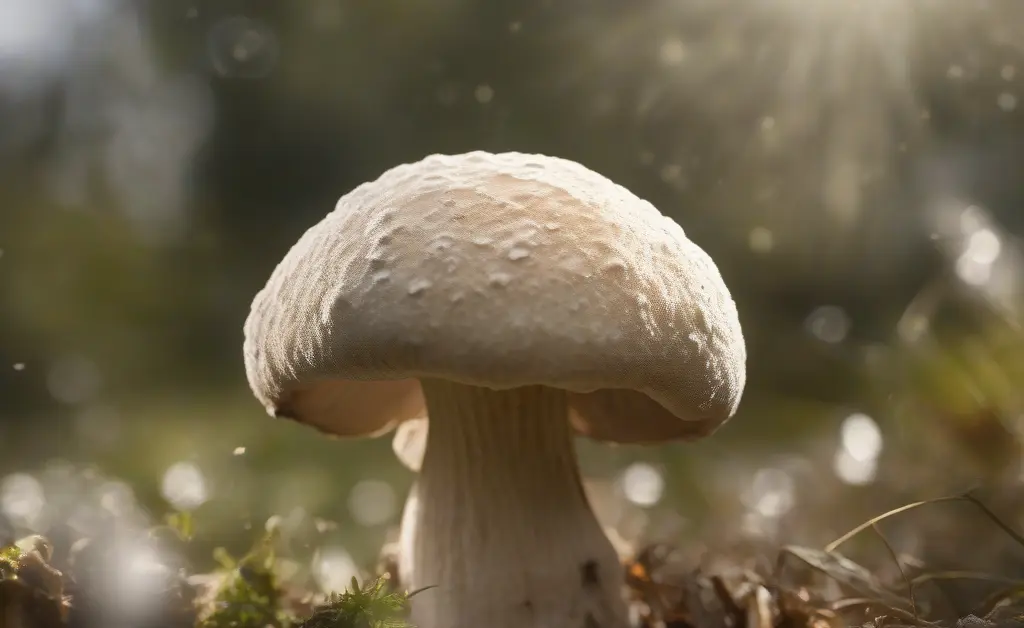
Once the puffball has matured and its internal gleba has converted into a powdery mass of spores, the next crucial phase of the puffball mushroom life cycle begins: spore dispersal. Unlike gilled mushrooms that passively release spores, puffballs employ unique and often dynamic mechanisms to ensure their reproductive particles are spread far and wide. The effectiveness of this dispersal directly impacts the ability of the species to colonize new territories and perpetuate its lineage.
Mechanisms of Spore Release
Puffball mushrooms are well-named for their primary method of spore release: a puffing action. As the mature puffball dries out, its outer skin, or peridium, becomes brittle. When external pressure is applied—whether from raindrops, falling debris, passing animals, or even human touch—the peridium ruptures or a pore opens, allowing the accumulated spores inside to be forcibly expelled into the air as a fine cloud. Some species also develop a central pore at the apex through which spores are released gradually or when disturbed. This mechanism is highly efficient, capable of launching billions of microscopic spores into the air currents, where they can be carried considerable distances.
The Importance of Rain and Impact
Environmental factors play a paramount role in triggering spore dispersal in many puffball species. Rain is a particularly significant catalyst. The impact of raindrops hitting the surface of a mature puffball creates the necessary pressure to eject spores from the fruiting body. This natural mechanism ensures that spores are released during periods when moisture is abundant, which is also favorable for their eventual germination. Similarly, physical impact from animals or falling branches can serve the same purpose, turning the puffball into a biological “smoke bomb,” maximizing the reach of its reproductive efforts across the landscape.
puffball mushroom life cycle pictures
Visual aids, such as pictures, can greatly enhance understanding of the various stages of the puffball mushroom life cycle. A series of photographs would typically begin by illustrating the initial, almost invisible stage: a single spore, perhaps magnified, followed by images of delicate mycelial threads spreading through soil or wood. Subsequent pictures would show the emergence of the young, white, firm fruiting body, often appearing as a small, smooth ball. As it matures, photographs might capture the puffball growing in size, sometimes developing a firmer outer skin. The critical transformation of the gleba would be depicted through cross-sections, showing the internal white flesh gradually turning yellow, then olive, and finally a dark, dusty brown or purple. The climax of the photographic sequence would likely be an image of a puffball releasing its smoky cloud of spores upon impact, perhaps from a raindrop or a gentle squeeze, clearly demonstrating the culmination of its reproductive journey.
Giant puffball mushroom life cycle
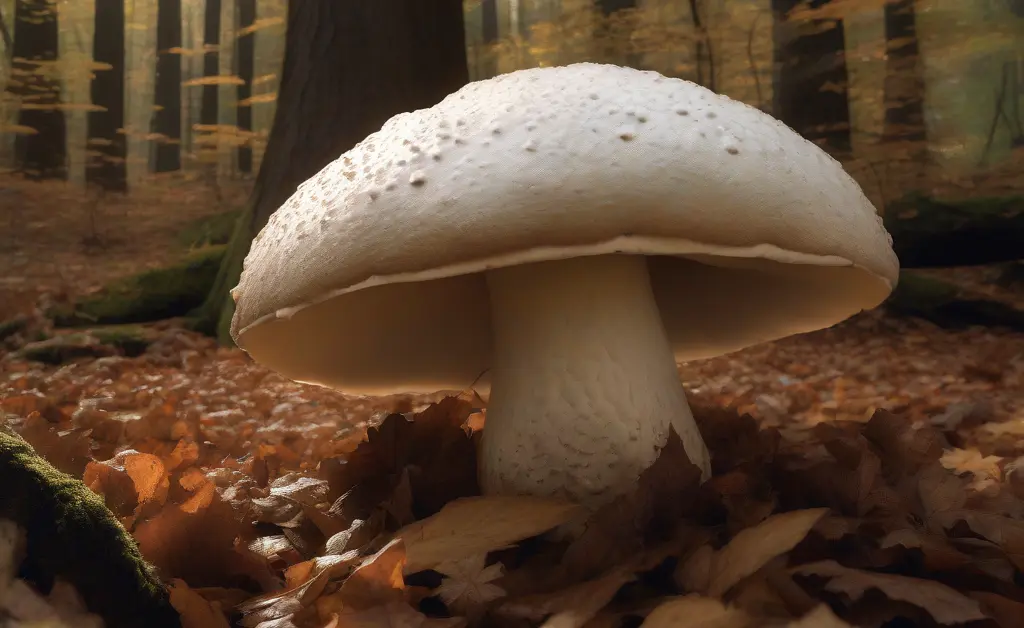
The life cycle of the giant puffball mushroom (often *Calvatia gigantea*) largely mirrors that of its smaller relatives, but with a significant emphasis on scale. Starting from a microscopic spore, the mycelial network of a giant puffball must be exceptionally robust and extensive to support the massive fruiting bodies it produces. These impressive fungi can grow to be the size of basketballs or even larger, sometimes weighing several pounds. This immense growth requires a substantial accumulation of nutrients and moisture over weeks, or even months, of unseen mycelial activity. The developmental stages, from the formation of the internal gleba to its maturation into a spore mass, proceed similarly, but on a grander scale. When mature, a single giant puffball can release trillions of spores, making its reproductive potential enormous. The sheer volume of spores underscores the success and efficiency of the puffball mushroom life cycle, particularly for these prodigious species.
Puffball mushroom life cycle indoors
Observing or cultivating the puffball mushroom life cycle indoors presents unique challenges and opportunities. While the general biological progression remains the same, controlling the specific environmental parameters becomes crucial. Indoors, mycelial growth can be initiated by inoculating a sterilized substrate (like sawdust or grain) with puffball spores or a pre-grown culture. Maintaining consistent temperature, humidity, and ventilation is essential for healthy mycelial colonization. The fruiting stage, where the actual puffball forms, requires careful manipulation of these conditions, often involving a “fruiting trigger” like a drop in temperature or an increase in fresh air exchange. However, puffballs are generally less commonly cultivated indoors for food compared to other mushroom varieties due to their specific growth requirements and the challenge of consistently producing large, edible fruiting bodies within a controlled indoor environment. Nonetheless, for educational or scientific purposes, observing the puffball mushroom life cycle in a contained setting offers valuable insights into fungal biology. Learning about puffball mushroom cultivation can provide a deeper understanding.
The intricate journey from a microscopic spore to a mature, spore-dispersing puffball mushroom is a testament to the complex and often hidden world of fungi. Each stage, from the unseen network of mycelium to the dramatic release of spores, is vital for the perpetuation of these unique organisms. Understanding this progression not only highlights the fascinating biology of puffballs but also underscores their ecological role in nutrient cycling and ecosystem health. The time it takes for a puffball mushroom to grow can vary significantly. Consider how long does it take for a puffball mushroom to grow for more information.
This material is shared for educational insight, not for clinical decision-making. Information regarding fungal species is intended for general knowledge and should not be interpreted as professional advice for consumption or medical purposes. Always consult with qualified experts for specific concerns related to fungal identification, edibility, or any health-related conditions. The identification and consumption of wild fungi carry inherent risks and should only be undertaken with proper training and caution. For more scientific information, please refer to NIH.
FAQ
What are the stages of a puffball mushroom’s life?
The puffball mushroom life cycle begins as a tiny spore that germinates in a suitable environment. This develops into a mycelium network, the main body of the fungus, which underground and is rarely seen. Eventually, a “button” stage forms above ground, which matures into the familiar puffball shape.
How do puffball mushrooms reproduce?
Puffball mushrooms reproduce through the release of microscopic spores contained within their fruiting body. When the puffball matures, these spores are expelled into the environment, often dispersed by wind, rain, or physical disturbance. If a spore lands in a favorable location with adequate moisture and nutrients, it can germinate and begin the process anew.
When do puffball mushrooms release their spores?
Puffball mushrooms release their spores as they mature and their outer walls begin to break down. This typically happens when the mushroom is mature and dry, making it easier for the internal spore mass to be expelled. Environmental factors like rainfall or a gust of wind can trigger the forceful ejection of the spore-filled interior.
Continue reading
You May Also Like
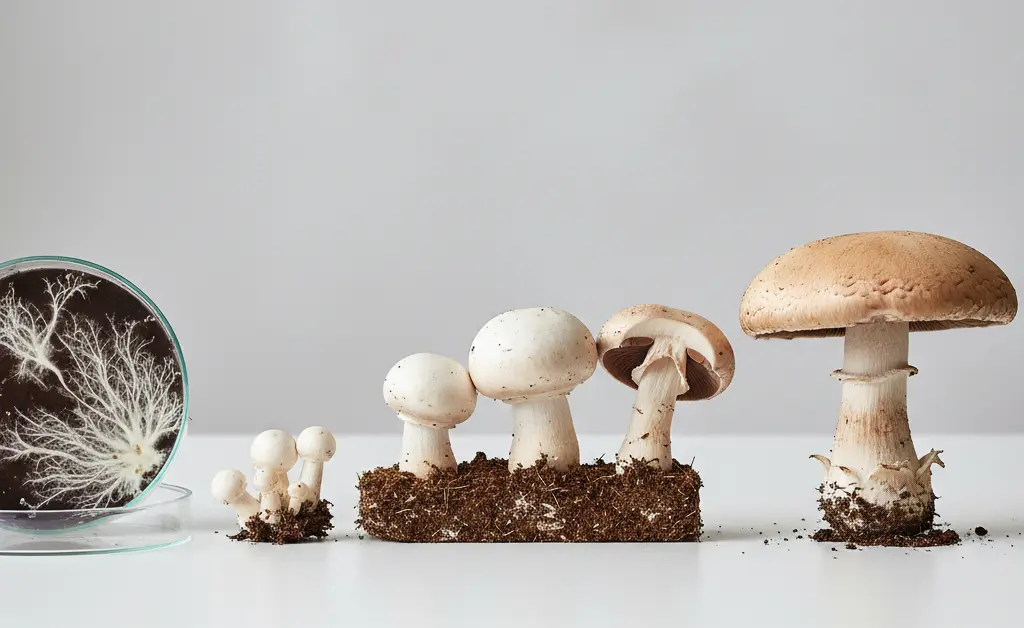
The Button Mushroom Life Cycle, Explained
The button mushroom life cycle involves four distinct stages, detailing the journey from microscopic spore germination to a fully mature fungus.
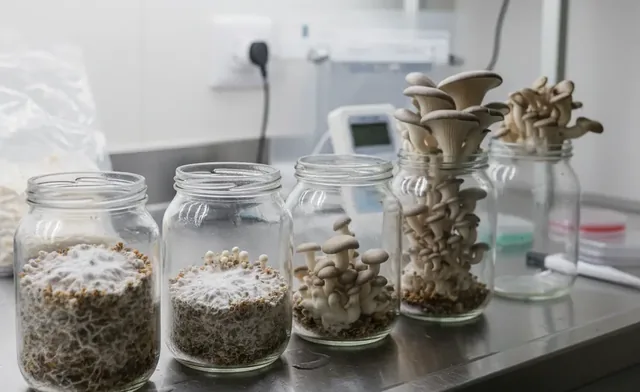
Decoding the Mushroom Cultivation Life Cycle
Detailing the sequence from spore germination to harvest, the mushroom cultivation life cycle is a process where each stage impacts your final yield.
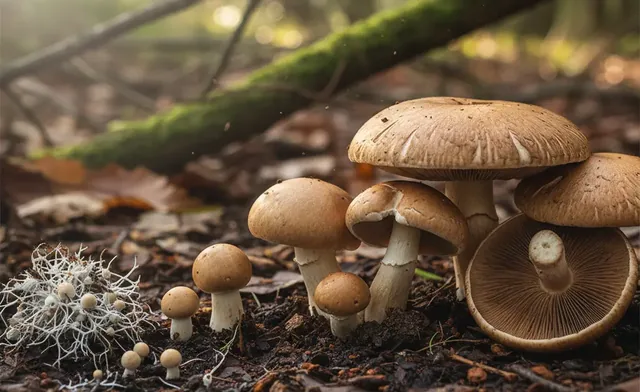
The Life Cycle of a Portobello Mushroom
Follow the complete portobello mushroom life cycle from tiny spore to mature cap with this practical guide to each distinct growth stage.